
March 2007 Archives
Latest article on the U.S.-Brazil alliance
Filed under: Americas
A.M. Mora y Leon has written a fantastic article about the ethanol alliance between the United States and Brazil, where she describes it as going far beyond ethanol. It's a must-read, so follow the link.
(And just in case you're wondering, articles are exclusive Publius feature stories that are much longer and much more analytical and descriptive than the everyday commentary you see in this space. You can see the latest ones on the right hand side, see all of them by clicking on the articles tab above, or even subscribe to the RSS feed under the syndication bar. Enjoy!)
 del.icio.us |
  digg |
  technorati |
  stumble upon |
  furl |
  reddit
Just when you thought the United Nations Human Rights Council couldn't get worse...
Filed under: United Nations
... well, it does!
Continuing our ongoing battle against the Human Rights Council's stupidity, it's time to unveil just how bad it had gotten over there. I don't want to take all the credit though. All of this information I'm about to show you is freely available on the council's website.
As was revealed in the last post linked above, the council has been holding its fourth session since its inception, going from March 12 through the 30th. In that time it has exempted Iran and Uzbekistan, two of the world's worst human rights abusers, from examinations into their actions. And did you know that development is a fundamental human right? It's news to me... Oh yeah, and let Sudan know of its "deep concern" over the blocking of its examination team from entering the country.
Today was different though! It made sure that things got much, much more stupid. Two absolutely incredible resolutions were passed today that are specifically worth mentioning: a resolution on religious defamation and another on "unilateral coercive measures" with regards to human rights. But why are these things stupid? Read on...
del.icio.us | digg | technorati | stumble upon | furl | redditAfrican genocide marathon
Filed under: Africa
In preparation for my trip to Africa this summer, I've been immersing myself in all types of media including books and video. So I've been watching and in some cases re-watching movies like Hotel Rwanda, Lord of War, Blood Diamond, etc. The Travel Channel also has a lot of interesting documentaries that they play that talk about everything from culture to geography.
So here's my question and I hope a lot of you out there give me your input in the comments! What books, movies, documentaries, etc. would you recommend regarding Africa?
del.icio.us | digg | technorati | stumble upon | furl | redditFidel: Philosopher Extreme
Filed under: Americas ~ Cuba
Did you know that Fidel Castro, as much as being a thug and a tyrant, is also a writer and philosopher? He had suggested it at his online dating profile on MillionaireMatch.com, but I didn't believe it until now. In an article published in Granma, "Castro" ponders the implications of the America use of converted ethanol from corn and sugar as fuel. After concentrating so hard that the universe (as well as those tender intestines of his) almost exploded, he came to the conclusion that should have only been obvious had we underlings had the brain capacity that he does: "Condemned to premature death by hunger and thirst more than 3bn people of the world!"Cuban President Fidel Castro has strongly criticised the use of biofuels by the US, in his first article since undergoing surgery last year.Yet the Darth Vader outfit keeping him alive now must be more of an echo chamber than an amplifier, because his intense meditations are entirely false. Fausta seems to know the deal, though, and I wonder if Granma would be willing to take a counter-editorial?He said George W Bush's support for the use of food crops in fuel production would cause 3bn deaths from hunger.
During that meeting on Monday, Mr Castro writes, "the sinister idea of converting food into combustibles was definitively established as the economic line of foreign policy of the United States".
[...]
In it, he says he has been "meditating quite a bit since President Bush's meeting with North American automobile makers".
As more and more corn grain is diverted to make ethanol, there have been public concerns about food shortages. However, ethanol made from cellulosic materials instead of corn grain, renders the food vs. fuel debate moot, according to research by a Michigan State University ethanol expert.Personally, I don't even eat corn all that often, so I guess in Castro's theoretical situation I'm safe. But what if, in fact, he's somehow correct about this and real science is wrong? What if three billion people are going to die from hunger? What will the poor and oppressed people of Cuba do, already living on the brink of existence due to the imperialist swine? The Northern invaders have a cunning plan indeed. From an article via Babalu blog:
Washington's sanctions choke off most trade with Cuba, but a law passed by Congress in 2000 authorized cash-only purchases of U.S. food and agricultural products and was cheered by major U.S. farm firms like Archer Daniels Midland Co. interested in the untapped Cuban market.Is there really anything to say after this? The only reason that the Cuban people aren't completely starving is because the United States is allowing the communist government to import food. The hilarity with which we can now reread his "article" is enormous. If anything, though, Fidel Castro is no philosopher. He is a fool.Cuba refused to import one grain of rice for more than a year because of a dispute over financing, but finally agreed to take advantage of the law after Hurricane Michelle in 2001 cut into food stocks.
Since then, Cuba has paid more than $1.5 billion for American food and agricultural products, said John Kavulich, senior policy adviser at the U.S.-Cuba Trade and Economic Council of New York.
del.icio.us | digg | technorati | stumble upon | furl | redditThat infamous censored media
Filed under: Belarus ~ Europe
Suehp Rom has a cool post at his blog. The media in Iran is censored and satellite dishes are officially banned. But a picture reveals it all.

While not covering the entire cityscape, I took a similar picture during my time in Belarus. And while news censorship was pretty bad, the worst was the general programming. One can only take so many bad soap operas... no wonder there were so many dishes.

It looks like a lot of people make do.
del.icio.us | digg | technorati | stumble upon | furl | redditA new twist in Thailand
Filed under: Asia ~ Thailand
In the 21st century, when all governments to one degree or another are facing challenges to their legitimacy, former Prime Minister Thaksin's politics had been so divisive -- especially in Bangkok -- that the military felt that it could legitimately take power to end the standoff. Tanks and soldiers began roaming the streets, Thaksin fled the country, and the military installed its own prime minister to run the country until and eventual return to democracy.
However, the military has a legitimacy of its own that it must keep. The promises it made, and even those it didn't, are constantly evaluated for performance. Military regimes in general tend to have relatively short lifespans, but those without a coherent message or policy direction go down faster than others. With the Muslim insurgency in the south growing much worse, economic policy off course, civil and political freedoms restricted, and the constant talk of reinstituting emergency laws, its legitimacy is on the wane. Opposition is beginning to mount once again.
Gen. Sondhi has been thinking a lot about the latter lately. Yet he faced rebellion when he brought it up from the very prime minister that he installed to run the government. In fact, not only did the prime minister disagree with the idea, but he took it upon himself to announce on national radio that the emergency laws would not go into effect and elections would be held later this year.BANGKOK: Thailand's prime minister, Surayud Chulanont, rejected the advice of the general who put him in power, declining on Thursday to declare a state of emergency in Bangkok to clamp down on anti-government protesters and instead promising to hold elections before the end of the year.The military has one shot to rule, but as opposition has mounted, a decision to quell protest would be tantamount to crushing its own legitimacy. Interestingly, this announcement should have the same effect without restricting civil liberties. Now that people know when the elections are to be held, there really is no need to organize demonstrations. It was the kind of solution a military government probably didn't even think of."As of now, we will not declare a state of emergency," Surayud told reporters after meeting with General Sonthi Boonyaratglin, who led the September coup.
"I gave my opinion that if the situation does not constitute an emergency that jeopardizes the stability of the country, we cannot use that law," Surayud said.
On Wednesday, Sonthi declared that emergency measures were necessary in Bangkok to deal with protesters who have announced numerous rallies for the coming days.
After comments late Wednesday suggesting that he might side with the general, Surayud took the opposite tack: He said he still had the power to declare a state of emergency, which would suspend civil laws, but that the current situation did not merit the move.
Then he set a timetable for the return to democracy.
A referendum on a Constitution currently being drafted would take place no later than September, he said, and elections would be held on Dec. 16 or Dec. 22.
del.icio.us | digg | technorati | stumble upon | furl | redditHiding the face of [Russian] fascism
Filed under: Europe ~ Russia
Before the Winter Olympics of 1936, Hitler did a bang-up job on Berlin. He had to hide all of the work he had carefully been constructing from the world for a few weeks so that none would be the wiser about his plans to exterminate the Jews and conquer Europe. Anti-Jewish propaganda that had once covered the city was completely covered up, pro-Aryan and racist remarks in the media were halted, and undesirables were swept up and kept in camps. In other words, unless an individual knew better, the anyone visiting Berlin would have had no idea by simply looking around that Germany was a fascist power on the path to world war.

Sean Guillory reports that the pro-presidential, nationalist, perhaps even fascist youth group Nashi ("ours") has been blocked on the internet. Not for users in Russia itself, for the rest of the world.
Andy Young of Siberian Light replies that, "There can't seriously be anyone in the Nashi organisation who thinks that doing this will actually reduce the negative coverage they receive outside of Russia, can there?" I think the point is to do exactly that. While people may be able to criticize the fact that they can no longer see what's going on, the fact that they cannot see it prevents them from monitoring the development of the group's ideology. This step most assuredly reveals that Russia's youth politics and its politics in general are going the way of a once-dead ideology based on race elevation and power.
del.icio.us | digg | technorati | stumble upon | furl | redditThe colossal failure of the UN Human Rights Council
Filed under: United Nations
Foreign Policy's Passport blog has a post up about how the UN Human Rights Council has become a complete joke, a shadow of its supposed ideals. It writes about latest developments this week in Geneva:In Geneva this week, any pretense of utility or fairness that clung to the United Nations Human Rights Council finally evaporated. By a decisive margin, the Council voted to end its examination of Iran and Uzbekistan despite worsening human rights records in both countries. Japan, South Korea, and Brazil were surprising votes in favor of the free passes; they had been supported more predictably by Zimbabwe, Bangladesh, and Azerbaijan.Ironic given that Iran and Uzbekistan are perhaps some of the worst human rights violators in the world. Could Amnesty International possibly have been wrong when it declared "a new beginning for human rights" back in May 2006? No, it's a new beginning alright. It's an era of greater protection for human rights violators and back-patting for the insane leftists who supported its creation! Everyone wins! (Except the victims, but who are they, really?) In nearly a year, here is a brief list of some of the Human Rights Council's greatest accomplishemnts:
- Successfully condemned one country only, Israel.
- Repeat the above seven more times.
- Voted on June 30, 2006, to review Israeli human rights abuses at every council session.
- While investigating the Israeli-Hezbollah war, it announced that, "the Commission is not entitled, even if it had wished, to construe [its charter] as equally authorizing the investigation of the actions by Hezbollah in Israel." No bias here.
- Cuba is mounting a campaign to eliminate the council's ability to even investigate human rights.
And that's just some of them, but you can see the single-mindedness and uselessness of it all. Even the Human Rights Watch people are having to admit that their early optimism was clearly misplaced as best. Human rights isn't an issue that can be politicized and decided upon in the context of regional and despotic politics. But even when the council's democratic members don't stand up for them, all hope is lost.
Human rights are black-and-white. Only when a system based on objectivity and professionalism is put into place can a human rights council have any purpose other than making things worse.
del.icio.us | digg | technorati | stumble upon | furl | redditZimbabwe's opposition leader arrested
Filed under: Africa ~ Zimbabwe
A thin red line exists between what we morally can and cannot do. Such a line exists for all people, except for Robert Mugabe. His line is the horizon -- no matter how much he pushes the boundaries, it moves further and further away. He has systematically turned Zimbabwe into hell on earth, but even most tyrants will allow their opposition to exist in name while restricting their activities. Not Mugabe. He thinks that he's God himself. So I guess it should be no surprise that he has taken his rule one step further by arresting opposition leader Morgan Tsvangarai.HARARE, Zimbabwe — Police stormed the main opposition party headquarters Wednesday and arrested its leader shortly before President Robert Mugabe left for an emergency meeting of southern African leaders about the crisis in Zimbabwe.Zimpundit says that this shows that Mugabe is willing to do anything to crush the opposition and remain in power. Certainly so. In the moment, one would find it impossible to believe that genocide in Rwanda and Sudan could actually happen until it is well underway, regardless of the plentiful signs pointing in that direction well ahead of time.Morgan Tsvangirai and other Mugabe opponents were taken into custody hours before the opposition leader planned to talk to reporters about a wave of political violence that left him briefly hospitalized.
Police sealed off approaches to the Movement for Democratic Change headquarters and fired tear gas to drive away onlookers before taking Tsvangirai and the others away in a bus, said Eliphas Mukonoweshuro, an aide to Tsvangirai.
"We don't know their whereabouts. We don't know if they have been charged," he said.
Meanwhile, the world stands by idly interpreting events and, rather than acting on that analysis, hopes that the horizon will eventually end. A cartoon posted by Sokwanele sums it up:

del.icio.us | digg | technorati | stumble upon | furl | redditEgypt's democracy for the bureaucracy
Filed under: Egypt ~ Middle East
Today's "referendum" in Egypt on proposed constitutional changes passed by with a dismal, low turnout as most people there already know that the outcome is predetermined. Yet while most people are stuck in traffic or sitting down for a meal, there are some strident believers in Egypt's democracy who cannot allow for such leisures. Meet the Egyptians bureaucrat who, known for an average of five minutes of productivity a day, is working overtime to make sure that Mubarak's changes go through. In fact, they seemed to be the only ones, and not even under the clearest of consciousness. Read on:The Egyptian Organization for Human Rights said that in the southern Asyut governorate it had monitored local municipality cars broadcasting loudhailer warnings that those not voting would be fined 100 Egyptian pounds (about 17,5 US dollars).Vote or die? Mubarak seems to have taken P. Diddy's advice too strictly. In Egypt, you vote or you lose your job! The only only opinion that counts is that of the bureaucrat or high-ranking party member, and this so-called election shows that their opinion is universal. Will we see a 99.99% approval as we did in Anwar al-Sadat's days, or will Mubarak shave a few percentage points off to placate the United States?Observers also said public buses were being used across Cairo to take civil servants and workers to vote in the referendum, which has been met by indifference among large sections of the population.
'My name and the names of my colleagues were enlisted against our will,' said one public school teacher. Another civil servant said she was told her salary would be halved for a month if she did not vote for the amendments.
[...]
At one polling station in a Giza school, several dozen teachers and civil servants reported difficulties with voting procedures.
Does it matter?
Marc Lynch has the smartest and snarkiest quotables: "Most Arab outlets are reporting that Condoleeza Rice softened her criticisms of the referendum after meeting with Mubarak. How humiliating, how predictable. Abou el-Gheit is spooning out the terrorism angle - we must do this to protect ourselves, just as you did with your Patriot Act - and Rice (and at least some of the media) seems to be eating it up whatever the flavor. Yes, how could Egypt possibly fight its great terror menace while judges are supervising elections?" Zing!
Also, check out Sandmonkey, who writes about his own experience just yesterday with the riot police putting down a demonstration that he participated in.
del.icio.us | digg | technorati | stumble upon | furl | redditA lesson in legitimizing the opposition
Filed under: Kuwait ~ Middle East
Kuwait Unplugged writes about how the government pulled the plug on a show that he was due to appear on in which he'd talk about blogs. Read the whole post, but here's the most interesting point:They just don't learn, do they? The more effort you spend suppressing voices, the more those voices will find ways to be heard. The government should stop wasting its time and resources on suppressing opinions and focus on running the country. I even said that on the show.... wait a minute! Could that be the reason it got cancelled?! I hope I'm wrong!We are living in an era of openness, where even in closed societies technology has made it possible to see things that were once hidden. People are learning that they have the right and ability to decide for themselves, so by blocking the show, they are legitimizing whatever Zaydoun was saying by peaking the public interest. It's possible that when they viewed the program they could have decided that he's full of hot air, but now his point is only proven. Whether the government likes it or not, the people can find out if they want to.
del.icio.us | digg | technorati | stumble upon | furl | redditMubarak has Rice by the...
Filed under: Egypt ~ Middle East
Just days before Egypt is set to falsify "elections" on its latest constitutional reforms, which by all stretches of the imagination can be nothing more than a great leap backward, Condoleezza Rice hopped on a plane over there. The purpose? To smack President Mubarak around a bit and let him know that the United States has had enough of his despotic shenanigans, that he will not be receiving $1.3 billion in military aid next year, and that the country's people will have America's full support for their democratic aspirations. Take a look at her full comments:"We have had a discussion. I have made my concerns known as well as my hopes for continued reform here in Egypt," Rice told a news conference after meeting with Mubarak. "The process of reform is one that is difficult. It's going to have its ups and downs. We always discuss these matters in a way that is respectful, mutually respectful. But I have made my concerns known, and we have had a good discussion," she said.Oh wait, I guess I figured that wrong. The change of tone is mighty different compared to what she was saying in 2005. Just take a look:
Ladies and Gentlemen: In our world today, a growing number of men and women are securing their liberty.And now: we are not doing anything! Why? Because we can't. In 2005, the elections in Iraq and the Cedar Revolution in Lebanon made the march of democracy seem unstoppable. Now, with persisting problems in Lebanon due to Syria's domination and sectarian strife in Iraq, Arab leaders are relating these problems to democracy itself and asking their people if they want it. The answer, of course, is no.And as these people gain the power to choose, they create democratic governments to protect their natural rights.
We should all look to a future when every government respects the will of its citizens — because the ideal of democracy is universal.
For 60 years, the United States pursued stability at the expense of democracy in the Middle East — and we achieved neither.
Now, we are taking a different course. We are supporting the democratic aspirations of all people.
So regimes like that of Egypt are strengthening themselves on the knowledge that they have convinced their public that American ideas of democracy cannot apply to them. Even though they aren't happy at all with the way things are now, many think it would only get worse with democracy. This really limits how much pressure we can put on Mubarak, consequently leading to such lame statements like Condi was making this weekend.
Chalk it up to another defeat on the PR front.
del.icio.us | digg | technorati | stumble upon | furl | redditLukashenko lays down his law
Filed under: Belarus ~ Europe
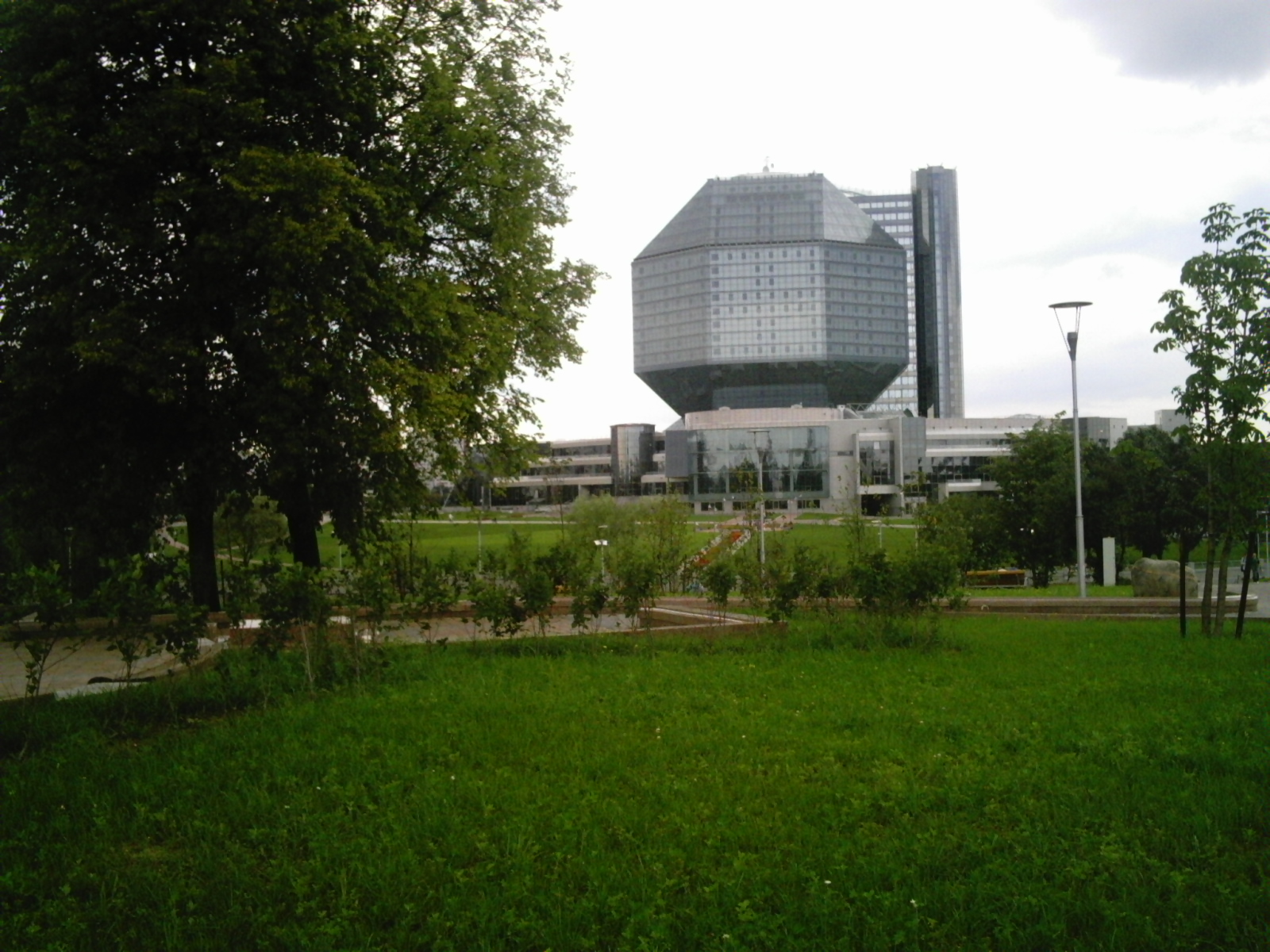
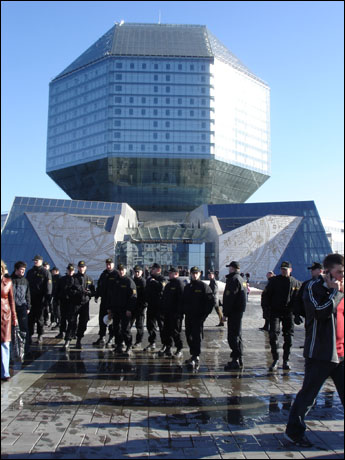
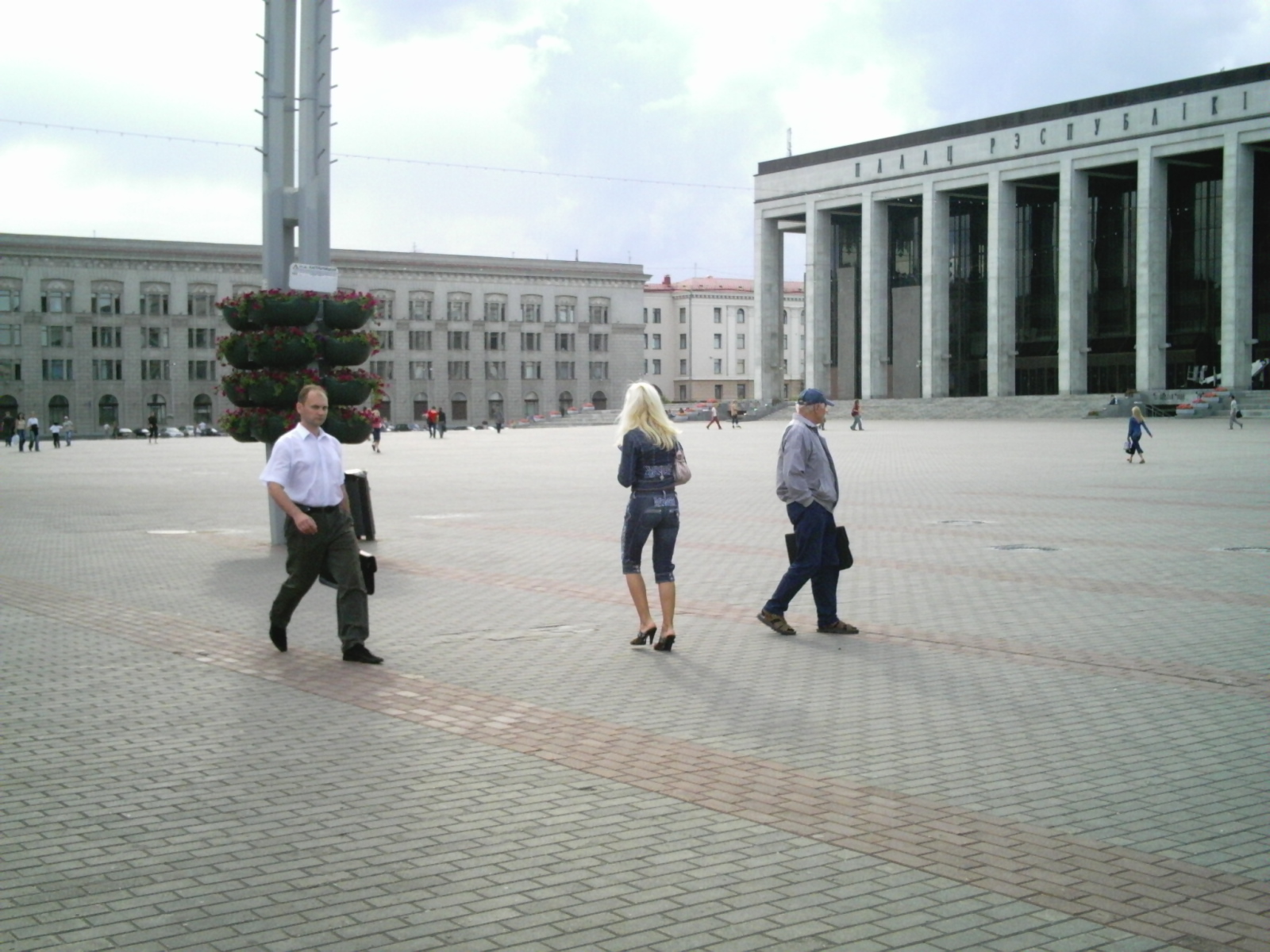
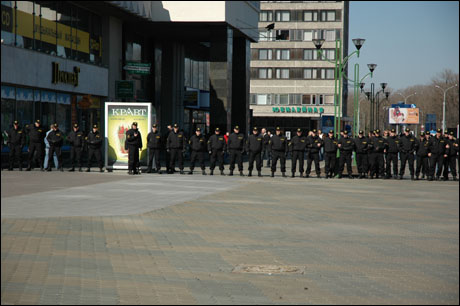
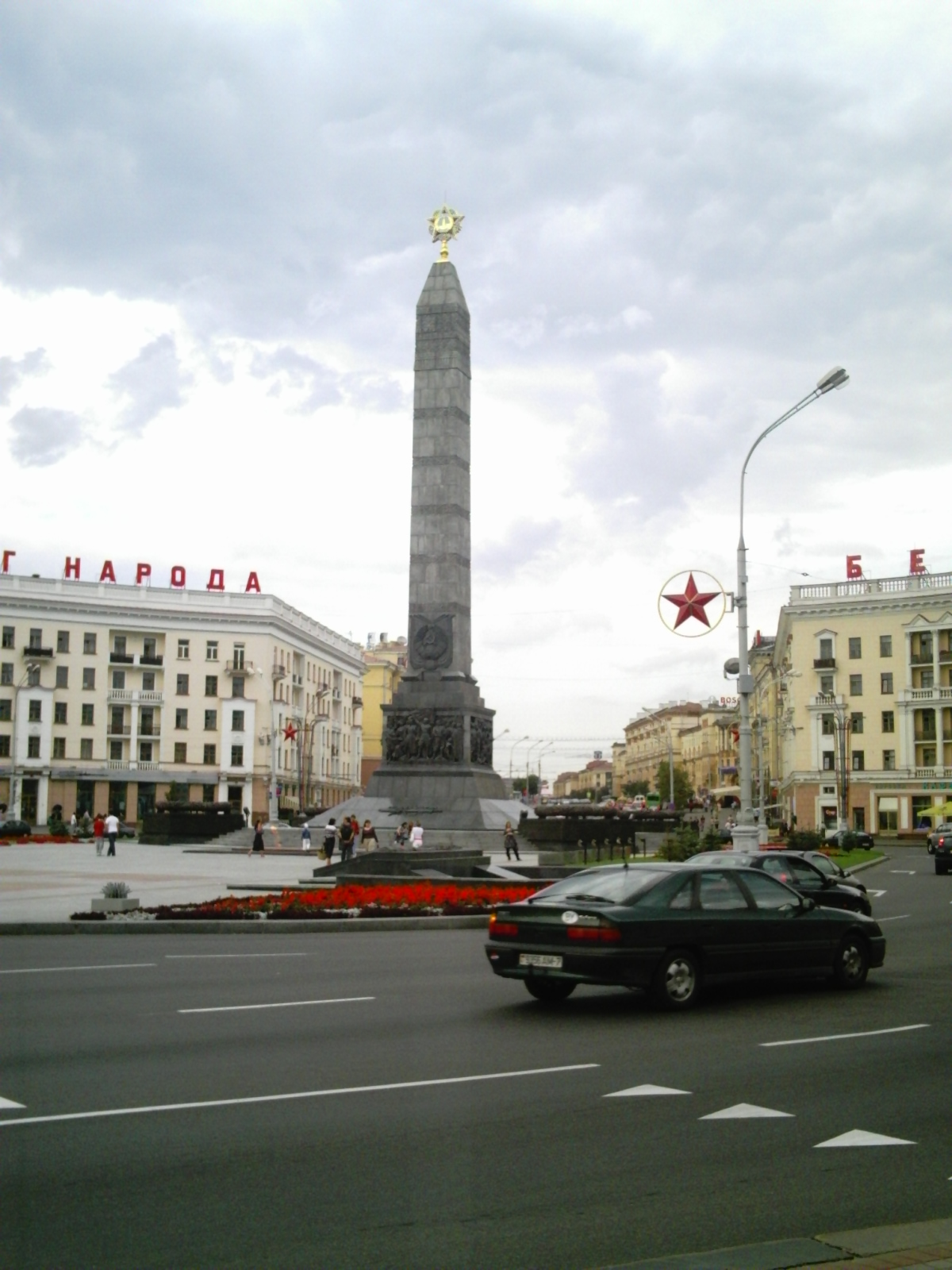
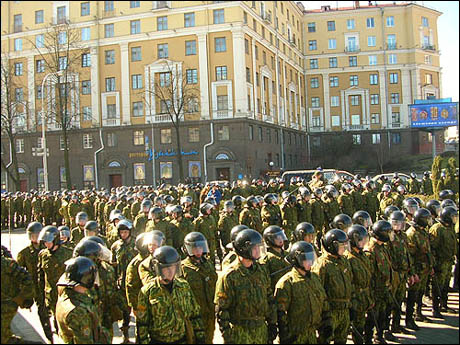
On March 25, Belorussian pro-democracy parties staged a rally commemorating the independence of the first Belorussian state, as well as the week-long rallies that took place in October Square following elections that were deemed neither free nor fair. How the government reacted would determine how serious it was about overtures it had been making about better relations with the European Union. With several MEPs on hand, there'd be plenty of witnesses to whatever happened. EU Commission President Jose Manuel Barroso even said that he was prepared for a "full partnership" with Belarus if it consented to democratic reforms.
But for all intents and purposes, it does not appear as if that will be the case.
 del.icio.us | digg | technorati | stumble upon | furl | reddit
Al Qaeda's full moon fantasies put on hold
Filed under: Middle East
Not long ago, Al Qaeda announced it has installed the Islamic State of Iraq, and Abu-Umar Al-Baghdadi is the Emir of the country, and also the Caliph of all countries between Maghreb to India. If that is not wishful thinking, then I don't know what is!
The good news is that some of the Iraqi tribes (Al Anbar and those who have members of both sects, such as Al-Dulaym, Shamr, Tamim, Al-Jabbou, Al-Bu Ajayl, Al-Obeid, Al-Jumaylat, Zubeid, etc) tired of Al Qaeda bullying, bombing and killing their men, women and children rally together in the attempt of weaken the terrorist organization. Hope more tribes will follow the example! (Al Sharq Al Awsat, March 21 and Al Hayat, March 22, 2007)
del.icio.us | digg | technorati | stumble upon | furl | redditHappy Weekend!
Filed under: Site Updates
We may have a new design... but that doesn't mean we've suddenly started working on the weekend! Monday will be full of great stuff, however. New articles, new commentary, and maybe even some protest babes.
Make sure to subscribe to our RSS feed, which provides updates on all of our material -- even a daily summary of the democracy news. It's an easy and quick way to see all of our content especially if you're on a slow internet connection. Check that out on the right to add it to your favorite reader!
Consider this an open thread.
And again, happy weekend!
del.icio.us | digg | technorati | stumble upon | furl | redditTime to Focus Again on the Iranian People
Filed under: Middle East
With the attention of the free world all on the nuclear programme of the Islamic Republic of Iran, we are no longer hearing anyone saying a word in support of the Iranian people. It looks as if they even didn't exist. I understand that the nuclear program is a pressing issue, but I also believe that it's high time to focus again on the Iranians who are suffering under one of the most repressive and Dark Ages regimes on the face of the earth.
I analyzed twenty-eight years of such a rogue regime and what it has meant for the Iranian people and the international community as well.
You can read my analysis at Real Clear Politics here.
del.icio.us | digg | technorati | stumble upon | furl | redditThe state of the system
Filed under: Africa
Former vice-president of Zimbabwe, Joshua Nkomo, writes a very interesting article in the Zimbabwe Independent about what he sees as what needs to be done in order to ensure the freedom of its people. It was very interesting, and at least I got the point, but I couldn't help but be sidetracked from one paragraph of the column that makes an assertion about political systems that I feel compelled to further explore. Here's what he wrote:A one-party state, sincerely operated, may indeed be a way of encouraging an open and constructive debate. A multi-party state, badly operated, may be just another way of keeping an elite in power. The point is it is not the formal system that really matters, but the spirit in which a single or multi-party state is managed or operated. What matters is that the leadership should tolerate and encourage diverse opinions to be heard -- opinions of different social groups, differ-ent economic interests, different regions. Since geographical regions within Afri-can nations tend to be inhabited by people of different languages and cultural backgrounds, partly as a result of colonial boundaries, regional dynamics to national politics are vitally important: recognising and accommodating regional differences is the best way to prevent them turning into counter-productive tribal rivalries. Diversity must be appreciated, celebrated and tapped for collective national good.Being largely a proponent of structural factors, I wonder: Is this even possible in most cases? Won't most leaders, in single party states, simply opt for absolute power regardless of their previous noble ambitions? Are diverse opinions and rights something that can be guaranteed by a leader, or something that has to be built into the system in a way that they cannot be breached on a whim? Mugabe himself is a prime example of this. Therefore, I think that power cannot be trusted, and must be restrained by the system itself.
Let me know what you think, as I would like to discuss these ideas and turn them into a larger article to post soon.
del.icio.us | digg | technorati | stumble upon | furl | redditDo we really want a timetable?
Filed under: Middle East
As British troops leave the south of Iraq, and Basra in particular, hell is slowly beginning to break loose. After leaving a governmental department building, masked gunmen from rival Shia factions immediately shot the place up in an attempt to take it over for themselves.
At least we can get a good look at as a case study of what would happen if troops were pulled from the country at large right now. It's important for the Iraqis to take responsibility, but every sectarian group has motives not in line with building a strong Iraqi democracy. The militias are all-powerful, so giving them so much responsibility now would only lead to chaos and likely ethnic cleansing. That can't be allowed to happen. That's why the country's centers of power need to be put firmly in control and the militias wiped out, with their remains scattering into the countryside where they can be picked off slowly.
del.icio.us | digg | technorati | stumble upon | furl | redditHistoric Mauritanian political debate airs across the globe
Filed under: Africa
The candidate debate leading up to the second round of Mauritania's presidential election is debuting momentarily on Al Jazeera tonight, to be broadcast across the entire region. Suehp Rom calls it "North Africa's equivalent of the Nixon-Kennedy debate." Hardly has ever a moment like this passed in the region, where two candidates are able to freely debate issues of importance to the country in order to legitimately win the votes of the people. From what I know, it will center on international political affairs, such as regional issues and relations with Israel, as well as local politics and rights.
Say what you want about Al Jazeera. It may have a lot of anti-American and and otherwise stupid commentary, but they have a lot of good and interesting content too. Remember, they aren't an American channel -- they're an Arab channel. And the fact that they are the ire of Arab governments everywhere shows how much they've been able to advance the debate on many key issues.
del.icio.us | digg | technorati | stumble upon | furl | redditSend in the ninjas
Filed under: Africa
Following a brutal crackdown on the opposition, Mugabe has become more isolated than ever. Even the African nations can no longer ignore the plight of Zimbabwe's people, as they have done for so long. Even Mugabe's own party and security services, discontent with their own standard of living and the constant danger they are in by enforcing such a regime, are turning on him. The entire country is about to collapse. What's a lone dictator to do?
Why, send in the ninjas, of course! I didn't know they had ninjas in Africa, but Angola apparently is flush with them. Must be all that recent Asian investment...Angola is sending 2500 of its feared paramilitary police to Zimbabwe, raising concerns of an escalation in violence against President Robert Mugabe's opponents, it was reported today.So this is what it comes down to. Most of Mugabe's security forces really are human. They have families to take care of, which is the only reason they would take such a job. But they also live amongst the very people that they repress. Living standards have also gone down so much that the consequences of their actions are no longer worth the pay. They've been abandoning their master -- along with teachers, civil servants, and other public employees -- because the benevolent dictator can't even feed them anymore!Zimbabwe's Home Affairs Minister Kembo Mohadi confirmed the imminent arrival of the Angolans, Britain's The Times reported today.
He said 1000 Angolans were expected on April 1, with the rest to follow in groups of 500.
The paramilitaries, notorious for their violence and dubbed ninjas for their all black uniforms, form part of the presidential guard of Jose Eduardo dos Santos, who has been in power in Angola since 1979.
[...]
This was the first time there has been such a large group, one source said.
With his forces abandoning him, he must look outside to foreign forces. These are people who don't live amongst the ZImbabweans and don't face the consequences of their actions. It's a typical move used by everyone from the Iranians to the Chinese to repress domestic discontent. But it has become obvious that Zimbabwe is reaching a tipping point. With the church calling for Mugabe to be toppled, and people so hungry that they don't care whether they live or die, mass action is going to happen. Soon.
del.icio.us | digg | technorati | stumble upon | furl | redditIran gets gassier, pushing Gulf states away
Filed under: Middle East
President Ahmadinejad just inaugurated the Iran-Armenia gas pipeline. "The pipeline will allow transfer of 400 million cubic meter of Iranian gas to Armenia per year during the first phase of the project, to be increased to 2.5 billion cubic meters per year."
Approximately 100km of the 140km, $120 million pipeline is in Iranian territory. The pipeline was constructed in 650 days.
What does it say about Iran's leadership? To the very least that it doesn't stay put while the US and Israel complain about Iran's regional and global ambitions. Iran's bullying attitude deeply upsets (read: frightens) the Sunnis. Thus the Gulf States make plans to avoid the Iranian Strait of Hormuz. Roughly 20% of the world's daily oil supply passes through the strait.
It might work but don't hold your breath just yet. Can we pass the message to the US Congress, asap please?
del.icio.us | digg | technorati | stumble upon | furl | redditGood morning, sunshine
Filed under: Site Updates
It's a beautiful morning, and here in Boston we'll finally be reaching an exquisite 51 degrees for today's high. (Just enough to melt the ice that I have been too lazy to shovel from the patio).
The first day of the new Publius was very successful, with almost every kink worked out. We've also added some new features which you, the readers, may find very useful for keeping up to date on what goes on here. Today is a good day.
First of all, below every post you will see an updated social bookmarking toolbar that includes today's most popular sites. You can use it to save and share all of your favorite posts and articles!
Second, we have rerouted the RSS/Atom feed through Feedburner, which makes it look a lot better and is allowing us to add a lot of new features to the feed. I like RSS feeds and encourage them very much, so I've made sure that the full posts can be viewed with them. They will also provide a daily roundup of the links posted to "Democracy News" for your convenience. Sound too good to be true? Then you definitely need to check out the Syndication column on the right and subscribe!
We have a lot of great content for you as well if you're viewing the site with your browser. Scroll down to see all of the latest commentary. Also, check on the right hand side to see our latest longer, more insightful articles. You will also find the Democracy News feed. Here is a sample of the articles written since yesterday:- When you hire a Truthteller... (Colombia & Venezuela)
- Is Russia coming apart at the seams? (Russia)
- The Middle East's new democratic model (Mauritania)
Feel free to leave feedback. What would you like to know our thoughts on? What would make your browsing experience more pleasurable and intellectually stimulating?
del.icio.us | digg | technorati | stumble upon | furl | redditA must read post on Egypt's constitutional "reforms"
Filed under: Middle East
Professor Marc Lynch of Abu Aardvark blasts the Egyptian governments for its proposed constitutional reforms, and takes aim at the Bush administration for even thinking that the reforms are mixed, but generally positive in trend. He lists some of these reforms accomplishments, which include:- Removing judicial oversight of the electoral process.
- Giving the voters less than a week to decipher what they all mean.
- A history of blatant electoral fraud suggests it doesn't matter if they decipher it or not.
- Only members of registered parties may run for president, the only real one being that of President Mubarak.
- These reforms make constitutionally permanent the horrid emergency laws; things such as defaming the government or demonstrating publicly could be legally punishable with jail time.
del.icio.us | digg | technorati | stumble upon | furl | redditMore on Mauritania's move toward democracy
Filed under: Africa
If you were interested in the article on Mauritania's burgeoning democracy, then you're probably one of the few who would want to get into the nitty gritty of it. The Head Heeb is following the minute-by-minute politics and flip flops going on leading up to the presidential election runoff. I suggest his posts on it, because he seems to have a fondness for writing in-depth and analytically about these kinds of things that would drive anyone else bonkers...
del.icio.us | digg | technorati | stumble upon | furl | redditMcCain warns against the spread of socialism
Filed under: Americas
While Mitt Romney is my favorite in terms of domestic priorities, McCain takes the cake for his foreign policy stances. He has been consistently pro-democracy and pro-free trade. He visited Ukraine following the Orange Revolution, vows to make Latin America a top priority, and consistently bashes Russia for its slide into dictatorship. What's not to love about that? Here's what he had to say in a speech delivered in Miami:MIAMI (AP) - Republican presidential candidate John McCain warned on Wednesday against the spread of socialism in Latin America and pledged to give the region renewed U.S. attention if elected.Again, what's not to like about this? Unfortunately, we wouldn't even be talking about this today if something had been followed through with 45 years ago...Appearing in Little Havana, McCain carefully avoided criticism of President Bush but said the Iraq war "has diverted attention from our hemisphere and we have paid a penalty for that" in the form of a growing leftism embodied by leaders Hugo Chavez in Venezuela and Evo Morales in Bolivia.
In a speech to veterans of the ill-fated, CIA-backed Bay of Pigs invasion of Cuba in 1961, McCain said his first trip if elected to the White House in 2008 would be to Mexico, Canada and Latin America "to reaffirm my commitment to our hemisphere and the importance of relations within our hemisphere."
The Arizona senator said that "everyone should understand the connections" between Chavez, Morales and communist Cuban President Fidel Castro.
"They inspire each other. They assist each other. They get ideas from each other," McCain said. "It's very disturbing."
Cuban-Americans are a key voting bloc in electoral-rich Florida and typically cast their ballots for Republicans.
As president, McCain said he would work on political, diplomatic and economic fronts to counter the rise of socialism, including efforts to spread free trade. Yet the United States must also stress the advantages of capitalism and democracy to win "a war of ideas" in the region, he said.
del.icio.us | digg | technorati | stumble upon | furl | redditDeath to Christian schoolgirls! Death for drug possession! 20 years for Islamic militants!
Filed under: Asia
If my calculations are correct, this could prove to become ever the popular chant among those in the Islamic militant community.
This story is in our news feed, but I found it so absolutely insane that I had to post it directly to the main page. The Jakarta Post reports that Islamic militants who were caught following the beheading of three Christian schoolgirls in 2005 have been sentenced to death... just kidding! They're getting 14 to 20 years in prison.AKARTA (JP): Panel of judges in Central Jakarta District Court Wednesday sentenced Muslim militants between 14 and 20 years in prison for beheading Christian schoolgirls in Central Sulawesi's town of Poso in 2005.You've got to love Indonesia. Islamic militants who behead schoolgirls, paving the way for even more inter-religious carnage, get maybe 20 years in prison. Meanwhile, you may remember that an Australian women got the same sentence for trafficking drugs, though we can hardly know if they were planted on her person. Six other Aussia men are getting the death penalty on similar charges, in which the debate over their sentences is not even whether or not they will receive capital punishment (for they have been assured of that), but whether or not foreigners even are allowed to receive constitutional protection at all!Hasanuddin was found guilty for masterminding the beheading, buying the machetes and leaving a handwritten note at the scene vowing more killings to avenge the deaths of Muslims in an earlier conflict on Sulawesi island.
Judge Udar Siregar was quoted by Elshinta news radio as saying that Hasanuddin's action can be categorized as terror crime, which could spark fresh religious violence in the Central Sulawesi towns.
Meanwhile, two other conspirators Lilik Purnomo and Irwanto Irano were handed 14-year jail terms in a separated hearing.
Religious conflict in Poso had left at least 1,000 people dead from both Muslims and Christians from 1998 to 2002.
It makes you wonder. Is there a bias here?
del.icio.us | digg | technorati | stumble upon | furl | redditWelcome to the new Publius!
Filed under: Site Updates
So, when you just typed in our URL, the first thing you probably noticed was that Publius appeared fast for once. Yes, that's right, you didn't have spare time to hit the rest room and make dinner before the main page loaded. Then you probably noticed that the color scheme is entirely different, you can use social bookmarking sites, subscribe to our RSS feed, and -- oh my -- there's now two blogs and a news feed.
What happened here??
Sekimori happened. You can thank her for all the wonderful changes that Publius is now undergoing. Thanks to her design, we will be able to rapidly expand our content. We will no longer just focus on news commentary and analysis; but shorter commentary, news and blog links, and long articles that discuss broad and powerful ideas (you'll find those on the right hand side).
I am hoping that you will like what you see, and stay awhile. If you've always wondered and never found out what Publius and its contributors are all about, check the About page as well as the contributor profiles on the right. Also don't forget to subscribe to our RSS feed and feel free to participate in discussions on any thread!
UPDATE: Alright, a few glitches have already been found. Typical stuff that we're going to have to figure out. If comments have been made on a post, the number won't necessarily show up underneath. Also, you can't search the old archives yet and for some reason when you go to them directly they aren't showing up. We definitely need to fix that. The blogroll and resources page are also not finished, but don't worry, those will be done soon.
To clarify about there being two blogs and a news feed... This space you are reading right now will be reserved for shorter commentary. Now peel your eyes away and look to the right at the "Recent Articles" sidebar, where you will see that we are also posting much longer articles with more thought and depth. You can see a full list of them by clicking on the "Articles" tab above. There is also a Democracy News feed which is constantly updated, and you will take you to a lot of news articles that are relevant to this site. Make sure to check them all out.
UPDATE 2: The Archives page is completely fixed, and the main page is updating as it should be. The Resources page and blogroll are the only things not finished. Let me know if you encounter any other issues.
del.icio.us | digg | technorati | stumble upon | furl | redditWarning: include(/home/users/web/b2739/ipw.publiusp/public_html/left_sidebar.php): failed to open stream: No such file or directory in /hermes/bosnacweb07/bosnacweb07ar/b2739/ipw.publiusp/public_html/2007/03/index.php on line 1199
Warning: include(): Failed opening '/home/users/web/b2739/ipw.publiusp/public_html/left_sidebar.php' for inclusion (include_path='.:/usr/local/lib/php-7.3.2-xenial/lib/php') in /hermes/bosnacweb07/bosnacweb07ar/b2739/ipw.publiusp/public_html/2007/03/index.php on line 1199
Warning: include(/home/users/web/b2739/ipw.publiusp/public_html/right_sidebar.php): failed to open stream: No such file or directory in /hermes/bosnacweb07/bosnacweb07ar/b2739/ipw.publiusp/public_html/2007/03/index.php on line 1203
Warning: include(): Failed opening '/home/users/web/b2739/ipw.publiusp/public_html/right_sidebar.php' for inclusion (include_path='.:/usr/local/lib/php-7.3.2-xenial/lib/php') in /hermes/bosnacweb07/bosnacweb07ar/b2739/ipw.publiusp/public_html/2007/03/index.php on line 1203